

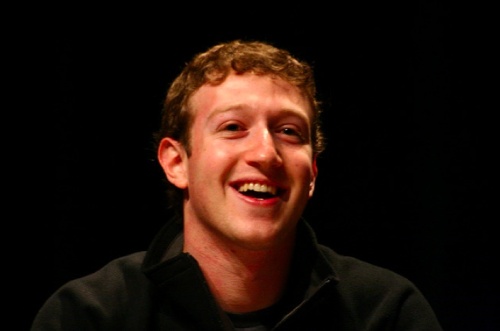
Photo by Jason McELweenie (deneyterrio on flickr), Attribution Creative Commons License
Mark Zuckerberg and William Randolph Hearst do not have much in common; however, each media mogul has a movie in which an actor portrays the person in an undesired way.
Hearst’s Pressure Response
Hearst attempted to buy all negatives of the film, so he could destroy them. When the RKO studio turned down the offer, Hearst banned his empire of newspapers and stations from mentioning any film made through RKO. He also banned his newspapers and stations from accepting advertising from any movie produced through RKO. (After two weeks, the ban was lifted for all RKO films except “Citizen Kane.”) Hearst blocked “Citizen Kane” from opening at Radio City Music Hall by threatening to publish a negative story about Nelson Rockefeller’s grandfather in American Weekly magazine. Many movie chains decided not to play the film because they feared Hearst’s wrath. The movie lost $150,000 in its first run. According to Variety magazine, Hearst was behind a voting block to keep Orson Welles from winning Best Picture and Best Actor awards for “Citizen Kane.”
“Citizen Kane” suffered a heavy hit from Hearst’s efforts; however, in the long run, Hearst’s attempts to extinguish the film only enhanced its significance.
Zuckerberg’s Blowing-It-Off Response
Three message points are common to the stories about Zuckerberg’s reaction to the movie.
1. “It’s a movie; it’s fun... I can promise you, this is my life so I know it’s not that dramatic. The last six years have been a lot of coding and focus and hard work, but maybe it would be fun to remember it as partying and all this crazy drama” (comment during Oprah Winfrey’s show). In another version of this message point, Zuckerberg light-heartedly characterizes the movie as fiction.
This response suggests that other people shouldn’t take the movie seriously either — it’s just fun. The response also features Zuckerberg as someone who does not take himself too seriously, a characteristic of successful politicians.
2. “We build products that 500 million people see… If 5 million people see a movie, it doesn’t really matter that much” (comment from Ben Parr’s interview).
Creating this context by focusing on audience numbers is a strategic way of framing the movie as insignificant.
3. Zuckerberg also steers the conversation to a safe area by talking about “lots of messages” he has received from people who saw the movie and feel inspired to become entrepreneurs. This gives Zuckerberg room to say something complimentary about the movie and himself.
Zuckerberg’s Little League Strategy
Zuckerberg also appeared on Oprah on the day the movie came out to announce the establishment of his foundation and his first gift of $100 million, which was given to the Newark school system. He says the timing was coincidental, which seems to insult the audience’s intelligence. This is what Jim Grunig critically referred to in his classes as the little league strategy, which occurs when an organization looks bad and decides to sponsor the little league team in hopes that this gesture will make up for things.
Is it effective? I don’t think so. Zuckerberg’s denial about the timing (even if it is authentic) is unbelievable, so people have reason to doubt his integrity. The timed date adds significance to the movie and makes it look like Zuckerberg is compensating for the film portrayals. It would have been smarter for Zuckerberg to have made the donation at a different time.
Hence, Zuckerberg’s public relations response is mostly smart: The message points are strong, but the news of his foundation and donation were poorly timed. What do you think?
Hearst Sources
Carringer, R. L. (1996). The making of Citizen Kane. Berkeley: University of California Press.
Citizen Kane. (n.d.). Retrieved from http://en.wikipedia.org/wiki/Citizen_Kane


 The PR Post
[…] The point of negative light lies in Zuckerberg’s response to the film: […]
[…] maintained by University of Oregon associate professor of public relations Tiffany Gallicano, a post has been made comparing Zuckerberg’s response to the movie contrasted with what William […]
[…] Read: https://prpost.wordpress.com/2010/10/10/zuckerberg-hearst-and-hollywood-pr-lessons-learned-from-the-p… […]
[…] https://prpost.wordpress.com/2010/10/10/zuckerberg-hearst-and-hollywood-pr-lessons-learned-from-the-p… […]
[…] The Social Network: It’s hard having a movie about your life Posted: October 24, 2010 by mmayall in Uncategorized 0 I was wondering around on the Internet this morning and found an interesting blog about William Hearst and Mark Zuckerberg and the Hollywood film indusrty. The common theme, It’s hard having the topic of a movie be your life. Check it out at https://prpost.wordpress.com/2010/10/10/zuckerberg-hearst-and-hollywood-pr-lessons-learned-from-the-p… […]
[…] consistent response to the storyline of the film shares the same attitude: it’s fiction. This is and appropriate response to the film. He recognizes that the story is true, it’s […]